If you’ve ever left a lamp on before leaving the house or kept a bedroom light on overnight, you’ve probably wondered if your lighting setup poses a hidden fire risk. I used to leave my desk lamp running 24/7 during college exam season, until my roommate showed me a news story about a local apartment fire caused by an overheated light bulb. That made me dig deep into the core question: do light bulbs make fire yes or no, and exactly when you need to worry about your lights being a hazard. The answer isn’t a simple binary, but we’ll break down all the facts, risks, and actionable tips you need to keep your home safe in this guide.
Do Light Bulbs Make Fire Yes or No? The Straight Answer
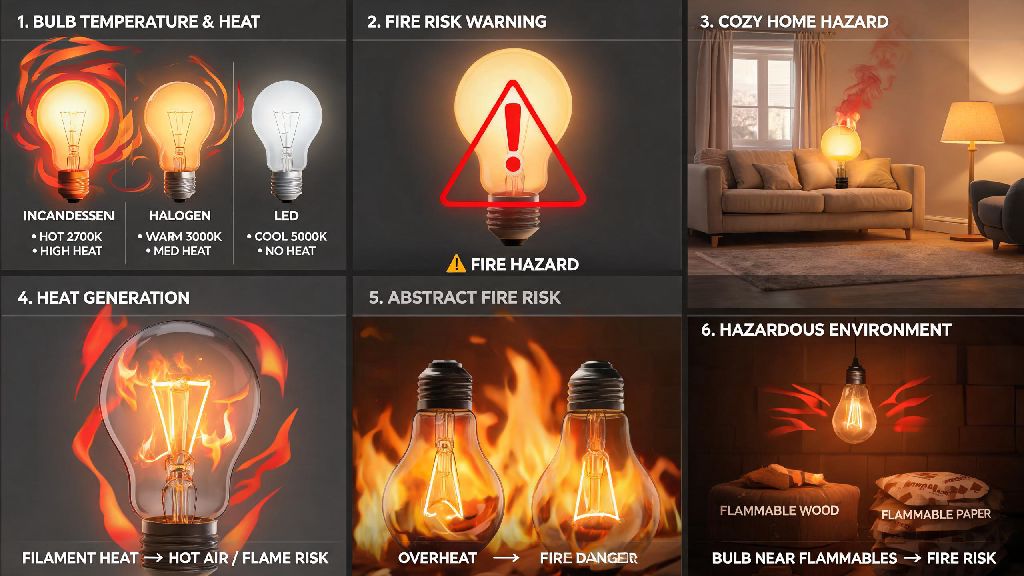
The short answer is yes, light bulbs can cause fires under specific conditions, but they will never ignite a fire on their own if used exactly as intended. To understand why, you have to look at how different bulb types generate light and heat. Traditional incandescent bulbs run extremely hot, with surface temperatures reaching up to 500 degrees Fahrenheit when lit – that’s hot enough to ignite dry paper, cotton fabric, or thin wood on contact. LED bulbs, by comparison, run far cooler, with most topping out at 100 degrees Fahrenheit even after hours of use.
That doesn’t mean LEDs are completely risk-free, though. If heat is trapped around the bulb for long periods, even low heat levels can build up enough to ignite very dry, flammable materials over time. The “no” part of the answer applies when you use the correct bulb for your fixture, leave space for ventilation, and keep flammable items far away from lit bulbs. When all safety guidelines are followed, light bulbs pose virtually no fire risk at all.
Most Common Scenarios Where Light Bulbs Cause Fires
Virtually all light bulb-related fires are caused by user error, faulty equipment, or poor maintenance, not a problem with the bulb itself. In almost every reported case, the fire could have been avoided with a few quick checks before turning the light on. The most frequent causes include:
I saw this risk play out firsthand at a friend’s apartment a few years ago. They put a 100W incandescent bulb in a small table lamp rated for 25W, then draped a knit scarf over the shade to dim the light for a movie night. They left for 20 minutes to pick up takeout, and came back to the scarf smoldering on the shade. They caught it before it spread, but it was a huge wake-up call for everyone in the building to check their own light setups.
Simple Steps to Reduce Fire Risk From Your Light Bulbs
You don’t need to be an electrician to make your lighting setup completely safe. These quick, low-effort checks and swaps take less than 10 minutes total, and cut your fire risk by almost 100%.
Always match bulb wattage to the fixture’s rating first. If you can’t find the rating printed on the fixture, stick to 40W equivalent or lower LED bulbs, which use only 6 to 8 watts of actual power and produce very little heat. You get the same brightness as an older 40W incandescent without the fire risk.
Never cover a lit bulb with flammable materials of any kind. If you want softer, warmer light, buy a proper heat-resistant diffuser made of glass or rigid plastic instead of draping fabric, paper, or plastic bags over lamp shades. For outdoor lights, clear away any leaves, brush, or debris that accumulates around the fixture every few months.
Make a habit of checking all your light fixtures every 6 months for signs of damage. Look for frayed cords, loose sockets, cracked bulb glass, or discoloration on the fixture that indicates it’s been overheating. If you notice any of these signs, stop using the fixture immediately until you can replace the damaged part or the whole fixture. If you’re still using old incandescent bulbs, swap them out for ENERGY STAR rated LED bulbs. They run 75% cooler than incandescents, last 25 times longer, and cut your electric bill at the same time.
Common Myths About Light Bulbs and Fire Risk You Should Ignore
There’s a lot of misinformation online about light bulb fire risks, and believing some of these myths can put your home in unnecessary danger. Let’s debunk the most widespread ones.
The first myth is that LED bulbs can never cause fires. While they are far lower risk than incandescents, they are not completely risk-free. If you put an LED bulb in an enclosed fixture it’s not rated for, or if there’s a manufacturing defect that causes a short, it can still overheat enough to ignite nearby dry material. You still need to follow all safety guidelines even when using LED bulbs.
Another myth is that lower wattage bulbs are always safe, no matter the fixture. That’s not true. If you have a lamp with frayed wiring or a loose socket, even a 10W LED bulb can cause electrical arcing that ignites dust buildup inside the fixture. Wattage isn’t the only factor to check for safety.
Many people also believe that leaving a light on overnight is always dangerous. That’s only true if the fixture is damaged, you’re using the wrong bulb, or there are flammable materials nearby. If your setup is in good condition and follows all safety rules, it’s completely safe to leave lights on overnight. I leave my low-wattage LED hallway light on 24/7 for my dog, and it’s never given me any issues in three years of use.
At the end of the day, the question of do light bulbs make fire yes or no comes down entirely to how you use and maintain your lighting setup. When you follow basic safety rules, use the right bulbs for your fixtures, and check for damage regularly, you don’t have to worry about your lights starting a fire. If you’re ever unsure if a bulb or fixture is safe, err on the side of caution: turn it off, inspect it for damage, and swap for low-heat LEDs if you haven’t already. These small, simple steps take barely any time, and they can save you from expensive, dangerous fire damage down the line.