If you’ve scrolled gaming forums or TikTok gaming feeds in the first half of 2026, you’ve almost certainly seen heated debates popping up about Light No Fire vs No Man’s Sky. Hello Games’ two massive open world projects have very different core promises, but a lot of overlapping fan bases, so it’s no wonder players are confused about which one deserves their limited playtime each week. I’ve put 120 hours into Light No Fire since its late 2025 launch, and over 400 hours into the latest No Man’s Sky 2026 “Galactic Civilizations” update, so I’m breaking down exactly how they stack up for casual and hardcore players alike, no hype, just real play experience.
Core Premise Differences: Light No Fire vs No Man’s Sky 2026
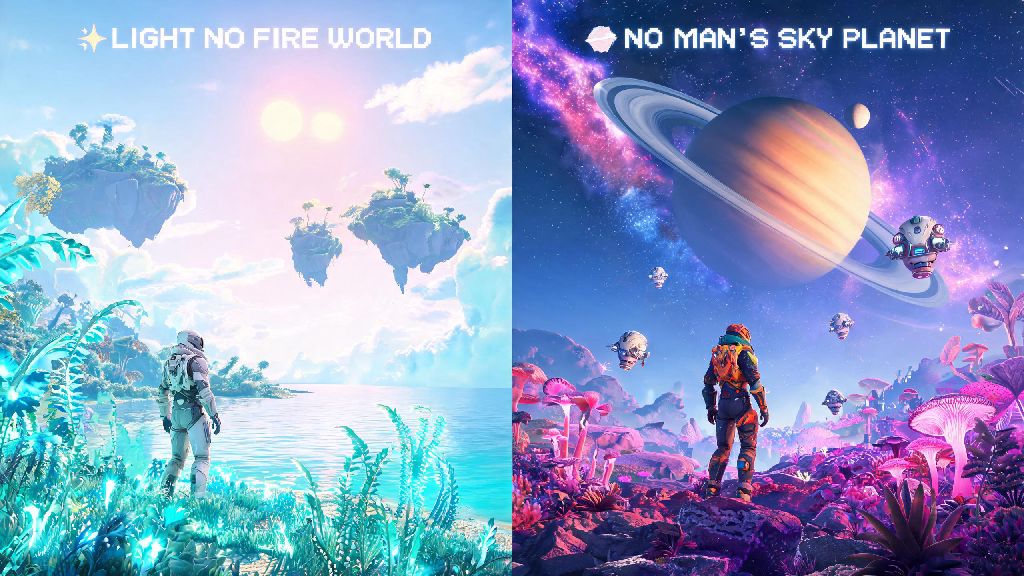
The biggest difference between the two games starts with their core design goals. No Man’s Sky launched back in 2016, and after years of massive free updates, its 2026 version lets you explore a procedural galaxy with over 18 quintillion unique planets, each with its own ecosystem, resources, and hazards. You can hop between star systems in custom-built ships, trade with alien civilizations, or even build a small colony on any planet that catches your eye. Galaxy-scale exploration is the name of the game here, and you’ll never run out of new corners of space to discover.
Light No Fire, by contrast, is built entirely around one single, massive procedural planet that every single player shares. There’s no space travel, no alien species from other star systems, just a huge, living fantasy world filled with magical creatures, ancient ruins, and varied biomes that stretch from frozen mountain ranges to tropical rainforests to volcanic badlands. The shared persistent world means that if you build a cabin on a hill, every other player who visits that hill will see your cabin, and any changes you make to the world stick for everyone. It’s a much more grounded, immersive experience for players who prefer deep dives into a single setting over hopping between thousands of planets.
You don’t have to pick one vibe over the other, of course, but it’s important to know what you’re signing up for before you drop $60 on either title. If you get bored of a setting quickly and love seeing wild, weird new landscapes every hour, No Man’s Sky is going to be a better fit. If you want to learn the ins and outs of a single world, form connections with specific locations, and collaborate on large-scale projects with other players, Light No Fire is the obvious choice.
Gameplay Mechanics That Set The Two Titles Apart
Beyond their core premises, the actual moment-to-moment gameplay of the two titles is almost completely different, even though they share the same DNA of procedural generation and open-world freedom. No Man’s Sky’s gameplay is rooted in sci-fi survival: you’ll manage oxygen, radiation, and toxicity levels as you explore different planets, use laser tools to mine resources, and upgrade your exosuit, ship, and multi-tool to take on more dangerous challenges. Combat is mostly ranged, with laser pistols, rocket launchers, and space dogfights against pirate fleets.
Light No Fire’s gameplay leans much more into fantasy survival and roleplay. You’ll manage hunger, thirst, body temperature, and exposure to magical corruption as you explore, use melee weapons like swords and axes or magical spells to fight creatures and raiders, and craft tools and gear from resources you forage from the world. Mounted combat and travel is a big part of the experience too, with over 50 different rideable creatures added in the 2026 “Wilds” update.
If you want to see the full list of 2026 feature updates for both titles, you can check the official Hello Games 2026 patch roundup for detailed breakdowns of recent changes. The most notable mechanic differences between the two games right now are:
Multiplayer functionality is another big gap between the two. No Man’s Sky only supports up to 32 players in a single lobby at once, and most of the galaxy is completely empty unless you actively play with friends. Light No Fire’s servers support up to 2000 players per regional map chunk, so you’ll run into other players regularly as you explore, join random group expeditions, or even get into PvP fights with rival settlement groups if that’s your thing.
Community and Long-Term Play Value in 2026
Both games have incredibly active, dedicated communities in 2026, but they attract very different types of players. No Man’s Sky’s community is mostly focused on solo and small-group play: you’ll find players sharing screenshots of weird planets, posting guides for hunting rare S-tier ships, and hosting creative base building contests. There are regular community expeditions hosted by Hello Games every few months, which give you exclusive rewards for completing specific challenges across the galaxy.
Light No Fire’s community is far more focused on roleplay and large-scale group activities. You’ll find entire player-run kingdoms, weekly roleplay events, and group expeditions to uncharted regions of the map to find ancient artifacts and rare resources. There are even player-run marketplaces where you can trade crafted items, magical gear, and building materials with other players for in-game currency. The shared persistent world makes all of these activities feel far more meaningful, since your contributions to a group project or roleplay event stick around for everyone to see long after you log off.
Cross-play support is available for both games in 2026, so you can play with friends no matter if they’re on PC, PS5, or Xbox Series X/S. No Man’s Sky also supports cross-save across all platforms, while Light No Fire added cross-save support in its March 2026 update, so you don’t have to worry about losing progress if you switch consoles or gaming PCs later down the line.
It’s also worth noting that No Man’s Sky has had 10 years of content updates as of 2026, so it has a lot more to offer for players who want hundreds of hours of unique content. Light No Fire is still fairly new, but Hello Games has committed to 5 years of free updates, so it’s catching up fast, with new content dropping every 2 to 3 weeks as of 2026. Both games have a lot of long-term play value, so you won’t run out of things to do any time soon no matter which one you pick.
Which Game Should You Buy in 2026?
At the end of the day, which game you should pick comes down to your personal play preferences, and there’s no wrong answer here. I recommend picking No Man’s Sky first if you love sci-fi, prefer solo play or small group play with close friends, or get a thrill out of exploring new, weird worlds every time you log on. It’s also a better pick if you don’t have a lot of time to play every week, since you can drop in for an hour or two, explore a new planet, and log off without feeling like you’re missing out on anything.
Pick Light No Fire first if you love fantasy settings, enjoy roleplay and large group activities, or want to work on long-term, collaborative projects with other players. It’s a better pick if you have a consistent group of friends to play with, or if you love getting involved in online gaming communities. The shared persistent world makes every play session feel meaningful, since even small contributions like gathering resources for your group’s castle can have a big impact long term.
The good news is that you don’t necessarily have to pick just one. Both games are available on Xbox Game Pass and PC Game Pass as of 2026, so if you have an active subscription, you can try both for no extra cost. They also regularly go on sale for 50% off on Steam and the PlayStation Store, so you can pick up both for less than $60 total if you wait for a sale. Cross-save support for both titles also means you can start playing on one platform and switch to another later without losing any of your progress, so you don’t have to worry about making the wrong choice of platform either.
Just don’t fall into the trap of thinking one game is better than the other because of online hype. I’ve seen a lot of players dismiss one or the other without even trying it, and that’s a huge mistake. Both games offer completely unique, polished experiences that are well worth your time in 2026.
I bounce between both games most weeks, and I don’t see that changing any time soon. Light No Fire is my go-to when I want to hang out with friends and work on our shared castle on the edge of the volcanic biome, while No Man’s Sky is perfect for lazy Sunday afternoons where I just want to drift through space and find weird new planets covered in glowing flora. The debate around Light No Fire vs No Man’s Sky will likely keep going for years, but at the end of the day, both are fantastic games that offer something for almost every type of open world fan. If you still can’t decide, grab a Game Pass trial and test both out for a few hours—you might end up falling in love with both, just like I did.