I’ve been there: you’re halfway through a backcountry hike, ready to unwind with your favorite smoke, and you realize you left your lighter on the kitchen counter. Or a storm knocked out power at home, and your matches are too waterlogged to work. No matter the scenario, knowing how to start fire no lighter for smoking is a handy skill that saves you from frustration, and even helps out in unexpected emergencies. I’ve tested dozens of no-lighter fire starting tricks over 12 years of camping and backcountry trips, and I’ve narrowed down the most reliable, low-effort options that don’t require fancy pre-packed gear. You don’t need to be a survival expert to pull any of these off, either.
Core Safety Rules for How to Start Fire No Lighter for Smoking
Before you try any of these methods, it’s non-negotiable to follow basic fire safety rules. Even a tiny flame for smoking can get out of control fast if you’re not careful, and the last thing you want is a house fire or wildfire to ruin your day. I’ve seen too many people skip these steps and end up with singed clothing or worse, so don’t cut corners here.
- Pick a non-flammable surface for your fire: use a stone ashtray, dirt patch, or metal fire pit, never wood, plastic, or fabric surfaces that can catch fire accidentally.
- Keep all flammable items (paper, extra herb, clothing, camping gear) at least 3 feet away from your fire starting area to avoid stray sparks catching something you don’t want burned.
- Have a dousing tool ready before you start: a cup of water, wet cloth, or small fire extinguisher works perfectly for small smoking fires, and you’ll be glad you have it if the flame gets bigger than expected.
- If you’re outdoors, check local fire restrictions first, and avoid starting any open fire during high wind or dry season, when even a tiny spark can spread quickly through dry brush.
These rules take less than a minute to follow, and they eliminate 99% of the risk associated with starting a small fire without a lighter. You can never be too careful when working with open flame, no matter how small you intend the fire to be.
Household Item Methods for At-Home Use
If you’re stuck at home without a lighter, you almost certainly have at least one of these items lying around that can get a flame going in seconds. Last winter, our power went out for 6 hours during an ice storm, and I had no matches or lighters left after lighting candles earlier that day. I tested three of these methods and got a flame going in less than 30 seconds total, no hassle at all.
The easiest method is using a stove burner, if you have a gas or electric stove. For gas stoves, turn the burner on low and hold your tinder (a cotton ball, piece of paper towel, or even your smoking material directly) near the flame until it catches. For electric stoves, wait until the coil glows red, then hold your tinder against it until it lights. 9V batteries work best for steel wool ignition if you don’t have a working stove: just touch a small piece of steel wool to both terminals on the top of the battery, and it will spark instantly. Hold the sparking steel wool to your tinder, and you’ll have a flame in seconds.
You can also use a magnifying glass, eyeglasses (if you’re farsighted), or even the bottom of a clear glass bottle if you have direct sunlight. Hold the lens so it focuses a small, bright dot of light onto your tinder, and hold it steady until the tinder starts to smoke and catch flame. Never leave a stove or oven unattended while using it to start a small fire, that’s one of the most common mistakes people make when they’re rushing to get their smoke lit.
Backcountry No-Lighter Fire Starting Methods for Outdoor Trips
If you’re out hiking or camping without a lighter, you can still get a fire going with items you probably already have in your pack, or with natural materials you can find on the trail. These methods take a little more practice than household options, but they’re 100% worth learning if you spend a lot of time outdoors.
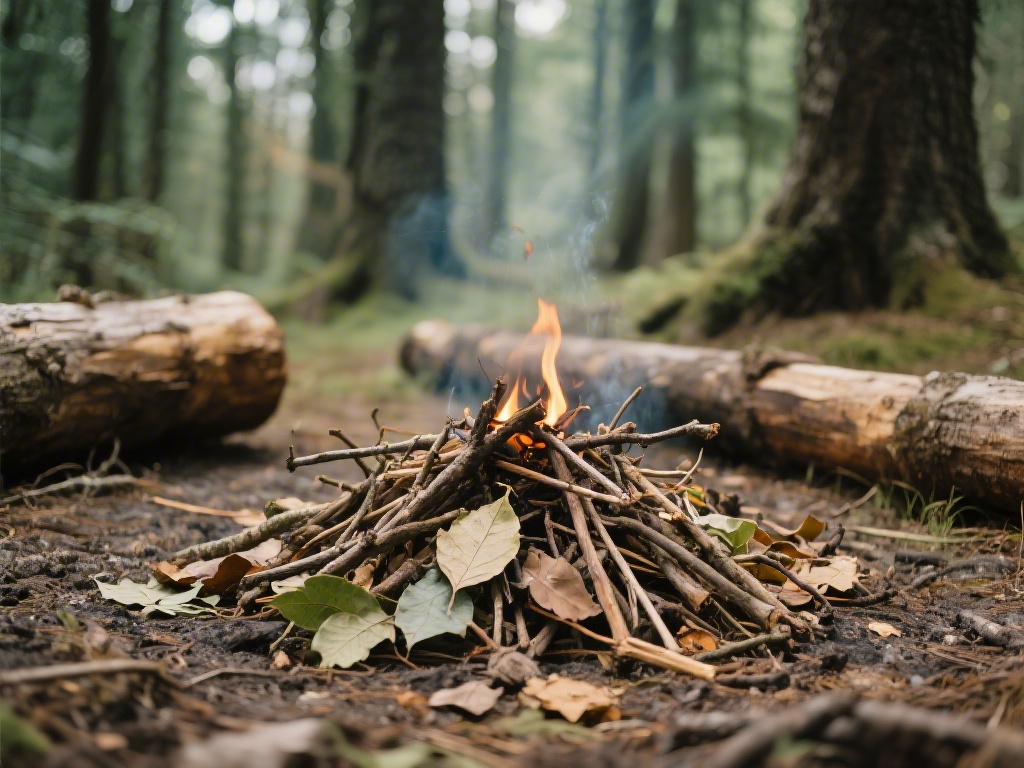
The most reliable method for most people is using a flint rod, which comes included on many multi-tools or can be bought for a few dollars and kept in your hiking bag. Strike the flint rod firmly with a piece of hard metal (the back of a knife blade works perfectly) to send sparks onto your tinder. Dry pine needles or birch bark make the best natural tinder for this method, they catch sparks almost instantly even in cool weather. I keep a small tin of dryer lint coated in wax in my hiking bag now, it catches even the smallest spark and burns for 30 seconds or more, which is more than enough time to get your smoking material lit.
If you don’t have a flint rod, you can try a fire plow, which uses friction to create hot embers. Carve a small groove into a piece of soft, dry wood like cedar or poplar, then rub a harder wood stick back and forth along the groove quickly until you create hot embers at the end of the groove. Tap the embers onto your tinder bundle, blow gently until it catches flame. This method takes a little practice, so it’s smart to test it once at home before you rely on it in the woods. You can also use the capacitor from an old disposable camera if you have one: just touch the two ends of the capacitor to a small piece of steel wool to create a spark, but be careful not to shock yourself while you do it.
Common No-Lighter Fire Mistakes to Avoid
Even if you pick the right method for your setting, small mistakes can keep you from getting a flame, or even create a safety hazard. I’ve made almost all of these mistakes myself over the years, so I know how frustrating they can be when you just want to relax with your smoke.
The biggest mistake people make is using wet tinder. Even the best ignition method won’t work if your tinder is damp, so always keep a small bag of dry cotton balls or dryer lint in your pocket or smoking kit if you’re heading out. If you’re stuck outside with only natural tinder, look for dry material under tree canopies or under fallen logs, where it’s protected from rain and dew. Another common mistake is building the fire too big: you only need a tiny flame to light your smoking material, so don’t pile up tons of tinder that can get out of control. A flame the size of a quarter is more than enough to light most smoking products, so you don’t need a big bonfire for this task.
Many people also forget to account for wind when they’re starting a fire outdoors. Even a small gust can blow your tinder onto dry grass or leaves, so always shield your ignition area from wind while you’re starting the fire, using your body or a backpack to block the breeze. Finally, never use flammable accelerants like gasoline or rubbing alcohol to speed up ignition. A friend of mine tried to use rubbing alcohol to speed up ignition on a camping trip last year, and the flame flared up so fast it singed off part of his eyebrow. He’s fine now, but it’s a good reminder that you don’t need any extra chemicals to get a small fire going for smoking.
You don’t need fancy gear or years of survival training to pull off this trick when you’re in a pinch. The best methods are the ones that fit your setting, so test a few of them at home first to see what works for you before you need to use it on a trip. At the end of the day, knowing how to start fire no lighter for smoking is just one of those small, useful skills that makes life a little less stressful, whether you’re stuck without a lighter at home or out in the woods. Just remember to prioritize safety first, and you’ll never be left frustrated because you forgot your lighter again.