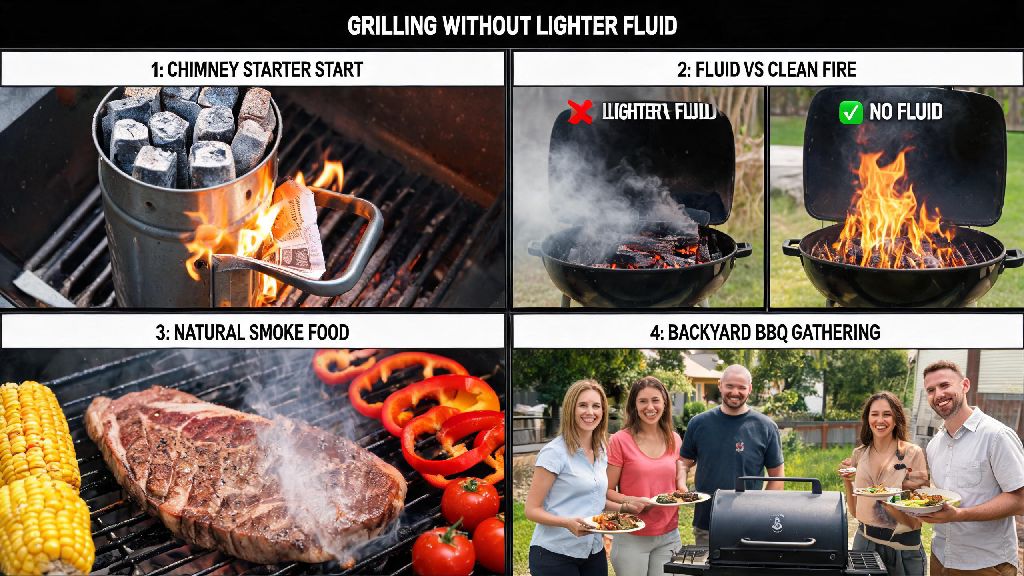
If you’ve ever bitten into a burger that tasted like harsh, chemical fumes instead of smoky grilled beef, you know exactly why lighter fluid is overrated. Many home grillers avoid it for health reasons too, since residual fluid can leave unwanted toxins on your food. Learning to start a charcoal fire no lighter fluid isn’t just a party trick—it’s a skill that makes every meal you grill taste better, and keeps your cooking process safer for everyone around the grill. I’ve been grilling for over 12 years, and I haven’t touched a bottle of lighter fluid in almost a decade, after I spent a whole summer testing alternative methods to find the most reliable ones.
Why Ditch Lighter Fluid for Your Charcoal Fire?
The biggest reason most people make the switch is taste, and for good reason. Residual lighter fluid can alter the flavor of even the highest quality meat and produce, leaving a bitter aftertaste that overpowers natural smoky notes. You can wait for coals to burn off most of the fluid, but faint chemical hints often stick around through the whole cook, especially if you use too much fluid to start with.
Safety is another major concern. Lighter fluid is highly flammable, and pouring more on already hot coals can cause sudden, dangerous flare ups that lead to burns. I’ve seen more than one griller end up with singed arm hair after overpouring fluid on a slow-burning pile of coals. For households with kids or pets, keeping toxic, flammable fluid out of reach is just one less thing to worry about during busy cookouts.
Many competition grill associations also ban lighter fluid for official events, since it creates unfair inconsistency between entries. If you ever want to enter a local grilling contest, learning to light coals without fluid is a non-negotiable skill you’ll need first.
Top Methods to Start a Charcoal Fire No Lighter Fluid
You don’t need fancy, expensive gear to get your charcoal hot without lighter fluid. Most of these methods use tools you probably already have at home, or can pick up for less than $20 at any hardware store. All of these methods for starting a charcoal fire no lighter fluid work for both lump charcoal and briquettes, so you don’t have to change the type of charcoal you already use.
Another common error is using too few fire starters when you’re building a charcoal fire no lighter fluid, which can lead to only half the coals catching, and the rest going cold before they heat up. For a standard 22-inch kettle grill, 2 paraffin cubes or 3 full sheets of crumpled newspaper is usually the perfect amount.
Common Mistakes to Avoid When Lighting Charcoal Without Lighter Fluid
Even with the right method, small mistakes can make your fire take way longer to light, or die out completely before you’re ready to cook. The first and most common mistake is using wet charcoal. Even slightly damp charcoal will take twice as long to light, and may never reach a consistent cooking temperature. Store your charcoal in an airtight plastic bin, off the ground, to keep it away from rain and ground moisture. I keep mine on a shelf in my garage, and I’ve had the same bag last for over a year without getting damp.
Packing your charcoal too tight is another frequent error. Fire needs oxygen to spread, so stacking coals in a dense, solid block will stop heat from moving between pieces. Leave small gaps between coals when you stack them, and use a loose pyramid shape to encourage airflow from the bottom up.
Don’t try to cook too soon, either. If you put food on the grill when coals are still black and flaming, you’ll get charred exteriors and raw interiors, plus extra soot on your food. Wait until at least 70% of the coals are coated in light gray ash, which means they’re at a steady, even heat perfect for cooking.
Finally, never use treated wood, glossy magazine paper, or ink-heavy cardboard as kindling. These materials release toxic fumes when burned that will stick to your food, and can make you sick if you ingest them. Stick to plain newsprint, uncoated cardboard, or natural dry kindling only. I made this mistake once when I used old cereal boxes with shiny printed logos, and my corn on the cob tasted like plastic for the rest of the cookout. I never did that again.
How to Keep Your Charcoal Fire Burning Steady Without Lighter Fluid
Getting your coals lit is only half the battle. Keeping them burning at a consistent temperature for the whole cook makes all the difference in how your food turns out. Start by mastering your grill’s vents: most grills have a bottom vent under the coal bed and a top vent on the lid. Open the bottom vent all the way when you’re first lighting the coals, to give the fire as much oxygen as possible. Once you’re cooking, you can adjust the top vent to control heat: closing it partially will lower the temperature, opening it wider will make the fire hotter.
If you’re doing a low and slow cook that takes longer than an hour, you’ll need to add fresh charcoal periodically to keep the heat steady. Add 5 to 10 fresh coals every 45 minutes to keep a consistent heat for cooks like brisket, ribs, or whole smoked chickens. Don’t dump a whole bag of cold coals on top of hot ones all at once, that will drop the temperature suddenly and extend your cook time by 30 minutes or more.
Avoid opening the grill lid more than necessary, too. Every time you lift the lid, you let out heat and oxygen, which can make the fire die down faster. Only open the lid to flip food, check internal temperatures, or add fresh coals. For windy days, set up a temporary wind block with a folding table or heavy tarp (just keep it at least 3 feet away from the grill to avoid fire risk) to keep the wind from blowing heat away from the coals.
At the end of the day, switching to starting a charcoal fire no lighter fluid is one of the easiest upgrades you can make to your grilling routine. You’ll get better tasting food, a safer cooking space, and you won’t have to worry about running out of lighter fluid halfway through a cookout. Don’t get frustrated if your first attempt takes a little longer than you expected—most people get the hang of these methods in 2 or 3 tries. Once you taste your first chemical-free grilled steak or vegetable skewer, you’ll never go back to using lighter fluid again.