If you’ve ever slammed on your 1998 GMC Sierra’s brakes only to notice the driver behind you isn’t slowing down, you know how terrifying brake light issues can be. One of the most common root causes of this problem is a 1998 gmc sierra no fire to brake light fuse issue, where the fuse isn’t receiving the electrical current it needs to power your brake lights. I’ve owned a 1998 GMC Sierra K1500 myself for 8 years, and I’ve worked on dozens of older GM trucks over the past 12 years, so I’ve run into this exact issue twice now. It’s far more common than most owners think, and it’s almost always fixable at home with basic tools and a little patience. You don’t need a fancy diagnostic scanner or hundreds of dollars in mechanic bills to get your brake lights working safely again.
Common Causes of 1998 GMC Sierra No Fire to Brake Light Fuse Issues
Before you start tearing apart your dash or tracing wires, it helps to understand what usually causes this specific power failure. Worn brake light switch is the top culprit for this issue on 1998 Sierras. The switch sits just above your brake pedal arm, and it triggers power flow to the brake light fuse every time you press the pedal. Over time, the internal contacts wear out, so it stops sending power even when you press the brake all the way down.
Corroded fuse box terminals are another super common cause, especially if you live in a wet or snowy climate where road salt seeps into the cabin over time. Green or white corrosion builds up on the metal pins that hold the fuse in place, blocking electrical current from reaching the fuse even if the rest of the circuit is working fine. Damaged wiring harness between the brake light switch and fuse box, and a faulty turn signal switch (these older GM models run brake light power through the turn signal circuit) are also frequent causes.
Before you start any formal diagnosis, run through these quick pre-checks to rule out simple fixes first:
How to Test for Power Flow to Your Brake Light Fuse
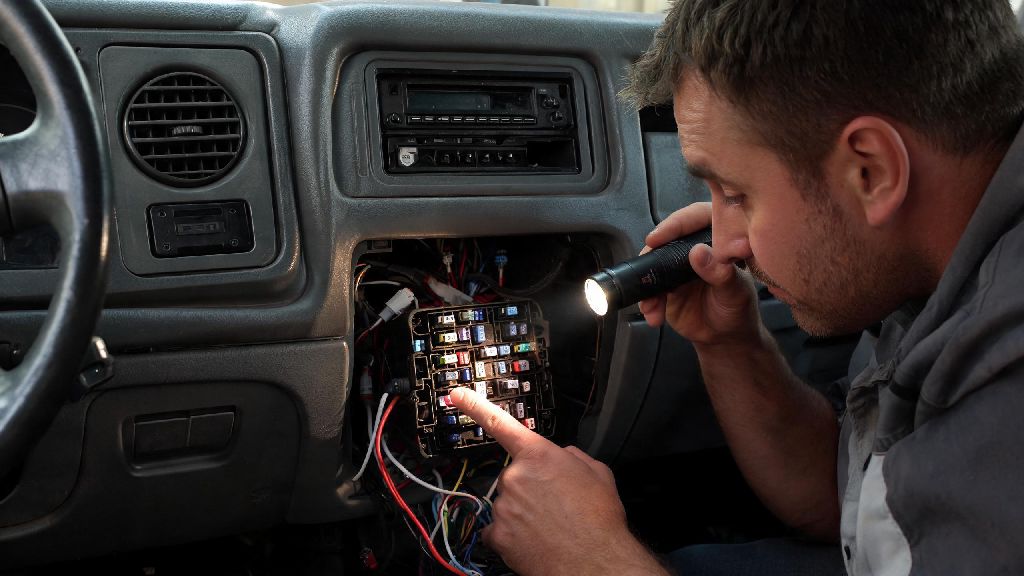
Once you’ve completed the pre-checks, you’ll need to confirm you actually have a power flow issue to the fuse. You can use either a multimeter or a cheap test light for this step; a $10 test light works just as well as a $50 multimeter for this job, so don’t feel like you need to buy expensive tools to do this correctly.
Set your multimeter to DC voltage 20V setting if you’re using one, that’s the right range for your truck’s 12V electrical system. Ground the black lead (or test light clip) to a bare metal part of the truck frame, not a painted surface; paint blocks electrical current and will give you false readings. Turn your key to the “on” position (you don’t need to start the engine) and touch the red lead (or test light tip) to the two small metal terminals on the top of the brake light fuse.
If both terminals show 12V (or the test light lights up for both), the fuse is getting power and your issue is somewhere after the fuse, like a bad bulb or damaged wiring to the rear of the truck. If only one terminal has power, your fuse is blown. If neither terminal has power, you’ve confirmed the no fire to fuse issue, and you can move on to fixes. Never work on electrical systems with the key in the start position to avoid accidental airbag deployment or short circuits that can damage other components.
Step-by-Step Fixes for No Power to Your Brake Light Fuse
Start with the easiest, cheapest fix first to avoid unnecessary work. The first fix to try is replacing the brake light switch. It’s held in place above the brake pedal with a small plastic clip, and it only takes 5 minutes to remove. Unplug the wiring harness from the back of the switch, then jump the two terminals in the harness with a small piece of wire. If your brake lights turn on when you jump the terminals, the switch is bad, and you can replace it for $15-$20 with an OEM part.
If the switch isn’t the issue, move on to cleaning the fuse box terminals. Pull the brake light fuse out of the slot and look for green or white corrosion on the metal pins inside the slot. Use a small wire brush and electrical contact cleaner to scrub away the corrosion, then blow out the slot with compressed air to remove leftover debris. Do not use water or regular household cleaners on electrical components; they can leave residue that causes more corrosion later. Once the slot is clean, put the fuse back in and test for power again.
If cleaning the terminals doesn’t work, trace the power feed wire to the fuse. The brake light fuse feed on 1998 Sierras is a 12-gauge orange wire that runs from the ignition switch to the fuse box, along the driver’s side under-dash area. Check for cuts, fraying, or melted insulation along the length of the wire, especially where it passes through the firewall near the brake pedal. If you find a damaged spot, cut out the bad section and splice in a new piece of matching gauge wire, then cover the connection with heat shrink tubing to protect it from moisture.
If all other fixes fail, check the turn signal switch. These older GM trucks run brake light power through the turn signal circuit, so a worn turn signal switch can block power from reaching the brake light fuse entirely. Replacement takes about 30 minutes, and OEM replacement switches cost $30-$50 at most auto parts stores.
Preventing Future Brake Light Fuse Power Issues
Once you’ve fixed the issue, there are a few simple steps you can take to keep it from coming back. First, inspect your under-dash fuse box once a year for corrosion, especially if you drive in areas that use road salt in the winter. Even a small amount of corrosion can cause intermittent power issues that are hard to diagnose later, so catching it early saves you a lot of hassle.
Replace any fuses that look discolored or have loose terminals even if they still work, they can cause voltage drops that wear out other components in the circuit. Lubricate your brake light switch mounting arm every 2 years with dry silicone spray to keep it from sticking, which can wear out the switch prematurely. Avoid jamming floor mats up against the brake pedal arm too, as that can keep the switch from engaging fully and cause uneven wear.
Also, avoid adding extra electrical accessories like LED light bars or aftermarket brake light kits to the stock brake light circuit. These draw extra power that the stock wiring and switch aren’t designed to handle, and they can cause repeated switch or wiring failures. I had a customer last year who added 4 extra LED brake lights to their Sierra and burned out 3 brake light switches in 6 months before they moved the accessories to a separate fused circuit. If you want to add extra lights, always run them off a separate relay and fuse connected directly to the battery.
Dealing with a 1998 gmc sierra no fire to brake light fuse problem doesn’t have to be a stressful, expensive experience. Most of the time, you can diagnose and fix the issue in less than an hour with basic tools you probably already have in your garage. Always prioritize safety when working on electrical systems, and don’t hesitate to reach out to a trusted mechanic if you run into issues you aren’t comfortable handling on your own. Your brake lights are one of the most important safety features on your truck, so fixing this issue as soon as you notice it will keep you and everyone else on the road safe.